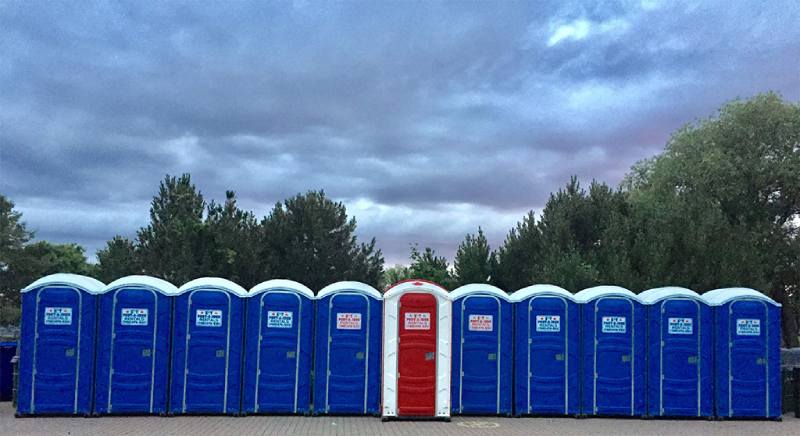
Plenty of event planning gets sorted months ahead. Accessible washrooms often get thought about last, sometimes not until someone at the event needs one and finds there isn’t one. That’s a bad moment, and it happens more than it should. A guest using a wheelchair, an older relative with a walker, a worker recovering from a knee injury, none of them can use a standard unit comfortably, and some can’t use one at all.
Accessible units exist and are straightforward to rent. Most providers carry them alongside their regular stock, so adding one to a portable bathroom rental order is usually a phone call rather than a special order. Providers such as portable bathroom rental list barrier-free models next to their standard range. What follows covers what these units actually include, where they’re expected, and how to work out how many you need.
What is an ADA-compliant portable bathroom?
Worth clearing up first, because the term causes confusion in Canada.
ADA stands for the Americans with Disabilities Act. It’s United States legislation, and it doesn’t apply in Ontario. The phrase has drifted north through industry marketing, so you’ll see Canadian suppliers use it, but the compliance standard behind it is American.
Ontario works under its own framework. The Accessibility for Ontarians with Disabilities Act and the Ontario Building Code set out barrier-free requirements covering things like door width, turning space, grab bar placement, and how high fixtures sit. Those rules are written mainly around buildings and permanent public spaces. For a temporary setup at an event, the specific obligation more often comes from your venue, your municipality, or the conditions attached to your event permit. Ask locally rather than assuming a label settles it.
The practical point is that features matter more than terminology. A barrier-free portable unit gives you:
- A wider door with a level or ramped entry instead of a step up
- Enough interior floor space for a wheelchair to turn
- Grab bars positioned for transferring on and off the toilet
- Fixtures and dispensers set at reachable heights
- A larger overall footprint than a standard unit
Set one beside a regular porta potty and the difference is obvious. Standard units are narrow, have a raised threshold, and offer no support to grab. That’s fine for most people. For anyone with limited mobility, it’s the difference between usable and not.
Where are accessible portable bathrooms commonly used?
Anywhere the public shows up, really, plus a fair number of places people don’t expect.
Weddings and private events are the common one. You may know your guest list, which helps, though people arrive with injuries and conditions you weren’t told about. Festivals and public gatherings are different again, since you have no idea who’s coming and the safe assumption is that some attendees will need an accessible unit.
Construction and commercial sites need them too. Crews change, and provincial job site requirements around washroom provision apply regardless of who’s on the roster that week.
Then there’s the municipal side. Parks, community events, government functions, anything run by or on behalf of a public body tends to have accessibility built into the planning already, often as a permit condition.
If your event is open to the public, plan for at least one accessible unit. That’s the sensible default even where nobody has explicitly asked for it.
Benefits of renting accessible portable bathrooms
The obvious benefit is that people can use the washroom. That sounds almost too simple to state, but it’s the whole point.
Beyond that, the extra room helps more people than you’d guess. Parents managing a small child, someone with a temporary injury, an older guest who just wants somewhere to steady themselves. A larger unit gets used by people who wouldn’t describe themselves as needing accessible facilities at all.
There’s a reputational side worth being honest about. Guests notice when an event has clearly been thought through, and they notice the opposite even more sharply. Someone having to leave early because they couldn’t manage the washrooms is the kind of detail that gets repeated afterwards. For a business hosting clients or the public, that’s a problem you don’t want to solve retroactively.
Perhaps the strongest argument is the plainest one. Somebody at your event will need it. Planning for that costs very little compared to the alternative.
How to choose the right accessible bathroom rental
Start with numbers. A common planning guideline is one unit per fifty guests for a shorter event, with accessible units counted as part of that total rather than on top of it. Larger or longer events need more, and events serving alcohol need more again. Most providers will work the numbers with you if you give them the guest count and the running time.
Placement deserves as much thought as quantity. An accessible unit parked at the end of a gravel path or across soft grass is accessible in name only. It needs firm, level ground and a clear route from where people actually are. Getting this wrong is the most common mistake, and it’s avoidable.
A few other things to compare between providers:
- Whether accessible units are in stock for your dates or need advance notice
- How servicing is scheduled across a multi-day booking
- What the unit actually includes, since barrier-free models vary between suppliers
- Whether handwashing stations can be placed at a reachable height nearby
Book early. Accessible units are stocked in smaller numbers than standard ones, so they run out first during peak season.
What to expect from an accessible bathroom rental service
The service side works much like any other rental, with placement carrying more weight.
The provider delivers and positions the unit. Tell them in advance that it’s an accessible unit so they choose the spot properly, on level ground with a clear approach. This is the conversation most worth having at booking rather than on the day.
Routine cleaning and restocking follow the same schedule as your standard units. Toilet paper, sanitizer, and waste removal, at whatever frequency your rental term covers. Pickup happens at the end of the term.
Add-ons are worth considering. A standalone handwashing station mounted at an appropriate height completes the setup. Washroom trailers are another route entirely, with accessible stalls, running water, and climate control, which suits weddings and corporate events where the standard barrier-free unit feels like a compromise.
Accessible washrooms rarely get noticed when they’re handled properly. That’s the goal. Nobody at your event should have to ask where they can go, or find out the answer is nowhere.
FAQs
What makes a portable bathroom ADA-compliant?
ADA compliance is a United States standard, so the term doesn’t strictly apply in Ontario, where the AODA and Ontario Building Code set barrier-free requirements instead. The features are broadly similar either way: a wider door, level entry, room inside for a wheelchair to turn, grab bars, and reachable fixtures. Ask your provider what a specific unit includes.
Are accessible portable restrooms larger than standard units?
Yes, noticeably. They have a bigger footprint to allow turning space inside and a wider doorway with a level or ramped entry. Factor that into your site plan, since they need more ground area and a clear, firm approach path.
Do I need an accessible restroom for my event?
For public events, plan on it. Requirements can come from your venue, your municipality, or your event permit rather than one blanket rule, so confirm locally. For private events, it comes down to your guests, though including one is a reasonable default given people arrive with needs you may not know about.
Can accessible units be rented for construction sites?
Yes, and providers stock them for exactly that. Provincial job site washroom requirements apply to your crew regardless of size, and crews change over the course of a project. Long-term rentals with scheduled servicing are standard for site work.
Are accessible portable bathrooms more expensive than standard portable toilets?
Usually somewhat, since the units are larger and stocked in smaller quantities. The difference is modest rather than dramatic. Given most events need only one or two, the added cost is a small share of a total sanitation budget.
